Friday, April 17, 2009

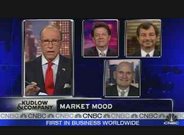
Quotable Quotes: Cool Cats Discussing Bulls and Bears (or is it birds and bees?)

With investors' animal spirits on the rise and much attention focused on the new White House pooch, the feline perspective on the sustainability of the current rally seems in order.

Have a good weekend.

Thursday, April 16, 2009

Minyanville posting: Antique Economic Theories: Priceless or Worthless?

excerpt from this week's article:
"What do you call a thousand economists chained together at the bottom of the ocean? A good start. (paraphrased from the movie "Philadelphia")

Most investors are largely unaware of the critical battle brewing for the soul of the global economy, driven primarily by the still-unresolved future structure of the finance industry. I introduced several key elements of this in my recent blog posting, In Defense of Financial Innovation. In that posting, I took the side of Secretary Tim Geithner in his quest to keep the financial infrastructure intact, while moving the regulatory ball forward toward..."

To read the full Minyanville commentary, click here
To view all Minayanville postings, click here

Wednesday, April 15, 2009

Beyond the Sound Bite: An Interview with Dr. Robert Barbera

My interview with the Executive Vice President and Chief Economist with ITG and author of The Cost of Capitalism: Understanding Market Mayhem and Stabilizing Our Economic Future explored the real world economic pragmatism articulated in his just published book - notably the principles of Hyman Minsky, the Minsky Moment, how the financial markets are a source of economic instability, and why free market capitalism is still the best way to go. We also touched on his views re the current economic climate.

Beyond the Sound Bite postings can be found at beyondthesoundbite.blogspot.com
To listen to this week's podcast interview, click here

Tuesday, April 14, 2009

Equity Market Headwinds: No Margin For Error

While it is encouraging that equities have rallied to the point where many 200 day moving averages are either flat or nearly so and nearly all sectors, styles, regions, and countries are above their 50 day moving average, not to mention the fact that many 50 day MAs have an upward slope, there are reasons, both fundamental and technical, to be more cautious about stocks over the near term.

The concern on the fundamental side is centered on valuation. For investors may have looked into the Great Depression II abyss and concluded that the worse case scenario (under $50 operating earnings for the S&P 500 for 2009) is less likely than it was 30 days ago. However, the current level of 850 for the S&P 500 implies either an above historically good times average P/E of 15 and/or earnings above $60. Consider the following: if stocks are a forward looking discounting mechanism and if its projected return is its historical average of 12%, then 850 today implies a 12 month price level of 952. That then supposes that 12 months forward to the end of 2010 would put the S&P 500 at 1066 (952 plus 12%). To justify 1066 and assuming the market’s historical good times P/E of 15 assumes $71 in operating earnings for 2010. That may come to pass but the great economic unknown is not 2009 but 2010, for next year's growth relies on the economic handoff from government to private enterprise and the consumer. The more bullish fundamental valuation conclusion then becomes a future time period that does not warrant an above average margin of error (as in a below average (< 15 times) P/E). Frankly, at 852 that’s a fully invested conclusion I am less than comfortable living with, more so when considering the following technical analysis points.

From a technical analysis perspective, many market technicians point to the favorable chart patterns, with bottom formations and upside breakouts. They may be right but it has been my experience that chart patterns have a far reduced predictive value than momentum and divergence indicators, and those indicators are not so sanguine right now. As the above chart* illustrates, for example, Momentum is clearly in deceleration mode and not confirming the index's price and MACD’s sustained and confirming strength. Experience shows that only when both are in unison (confirming the higher highs in price, specifically) can an investor feel more confident of the sustainability of the move. Added to this concern is the high overbought readings in the short term indicator, Slow Stochastics. Readings above 80 typically cause markets to pause.

Investment Strategy Implications

For the above stated reasons, taking some money off the table is advisable. Granted seasonal factors, such as April being the second best performing month of the year (historically), are supportive of higher stock prices. Moreover, there is every reason to feel more confident that, for the very short term, the worst of the economic and credit crisis has passed. However, concerns both fundamental and technical seem to warrant a less than fully invested posture at this time.

*Note how the Momentum reading is nearly flat while MACD is steady up.
click image to enlarge

Thursday, April 9, 2009

Minyanville posting: Still Building a Bottom

excerpt from this week's article:

"Now that stocks have rallied quite nicely and earnings news suggests that maybe a global economic (and societal) Armageddon has been forestalled, investors need to evaluate equities from both a fundamental-analysis and technical-analysis perspective. And from where I sit, stocks are in a no man’s land - slightly above fairly valued and lacking that third leg of the bottoming process I noted in..."

To read the full Minyanville commentary, click here
To view all Minayanville postings, click here

Wednesday, April 8, 2009

Beyond the Sound Bite: An Interview with Dr. Ian Bremmer


My interview with the president of Eurasia Group and coauthor of The Fat Tail: The Power of Political Knowledge for Strategic Investing explored key themes from his new book - notably the investment importance of political risk management, the power shift from capitals of finance to capitals of politics, and the factors involved in quantifying political risk. We also discussed his views on emerging markets and Brazil.


Beyond the Sound Bite postings can be found at beyondthesoundbite.blogspot.com
To listen to this week's podcast interview, click here

Tuesday, April 7, 2009

In Defense of Financial Innovation

There is considerable talk (much of it rather regressive) about the future of the financial system. In one camp are the advocates of a return to basic banking. Think George Bailey and “It’s a Wonderful Life”. Paul Krugman, John Bogle, and Meredith Whitney appear to belong to this group. Then there are those who believe that the system should evolve from where it was, only with better oversight and far greater transparency. By all accounts, Secretary Geithner and Mohammed El-Erian belong to this group.

As unpopular as it currently may be, I’m on the side of the Treasury Secretary and PIMCO CEO for the following reasons:

I believe financial innovation must be allowed to grow and even flourish as the benefits of risk management and opportunistic investing through derivatives, structured finance, and other heretofore unknown instruments is vital to the complex world of globalization and global capital flows. Financial innovation allows for the more efficient use of capital in new and innovative ways thereby enabling greater growth potential across most markets and economies. Perhaps most importantly, as providers of global capital, financial innovation is important to the dominant players in the markets - major institutional investors (pension funds, sovereign wealth funds, endowments, hedge funds, etc) - and their ability to manage large sums of money in the vast and growing global markets and economy. They want it. Even need it.

The George Bailey model is simplification for its own sake. A Luddite-like natural recoil action to the pain and suffering caused by the failure of proper oversight and transparency. Moreover, the Bailey model would relegate the US financial institutions to a dumbed-down version of finance completely at odds with a globalized world and economic system (not to mention the unintended consequences of assets flowing to other, more forward-thinking markets). I believe Secretary Geithner sees and understands this and that is why, much to the consternation of many old school thinkers, he is intent on keeping the current financial infrastructure in place, just fix that which went out of control courtesy limited oversight and inadequate transparency.

With better oversight and greater transparency, the benefits of financial innovation to the global economic system far outweigh the damage wrought by the inept supervision of a complex world of finance and capital flows.

Think of it this way, did FDR blow up the stock market after the 1929 to 32 crash? What he did was create the SEC, which served the system well until the free market ideologues got control of it over the past several decades and, with the aid of financial innovation, allowed the animal spirits to run roughshod over common sense and prudent asset management. Another example would be the Internet and the tech bubble blow up. Did technology innovation stop because of Enron and WorldCom and the multitudes of dotcom implosions? Of course not.

Financial innovation is a tool. And like any tool, it can be used for good or ill. You don't ban knives because someone gets stabbed. You don't ban guns because someone gets shot. And you don't ban cars because someone gets run over. Innovation is essential for forward progress. And, in the case of finance, an enabler of better asset and risk management.

Financial innovation is the baby. Don't throw him out with the bath water of poor oversight and limited transparency.

Friday, April 3, 2009

Quotable Quotes: WTF?


Here are two excerpts from yesterday’s FT article “Bailed-out banks eye toxic asset buys” that are certain to raise more than a few eyebrows:

“US banks that have received government aid, including Citigroup, Goldman Sachs, Morgan Stanley and JPMorgan Chase, are considering buying toxic assets to be sold by rivals under the Treasury’s $1,000bn (£680bn) plan to revive the financial system.

The plans proved controversial, with critics charging that the government’s public-private partnership - which provide generous loans to investors - are intended to help banks sell, rather than acquire, troubled securities and loans. Spencer Bachus, the top Republican on the House financial services committee, vowed after being told of the plans by the FT to introduce legislation to stop financial institutions ”gaming the system to reap taxpayer-subsidised windfalls”. Mr Bachus added it would mark ”a new level of absurdity” if financial institutions were ”colluding to swap assets at inflated prices using taxpayers’ dollars.””

“Officials want banks to sell risky assets in order to cleanse their balance sheets and attract new investments from private investors, limiting the need for the further government funds. Many experts think it is essential to take these assets from leveraged institutions such as banks that are responsible for the lion’s share of lending, into the hands of unleveraged financial institutions such as traditional asset managers, where they will have much less impact on the flow of credit to the economy.

Banks have three options if they want to buy toxic assets: apply to become one of four or five fund managers that will purchase troubled securities; bid for packages of bad loans; or buy into funds set up by others. The government plan does not allow banks to buy their own assets, but there is no ban on the purchase of securities and loans sold by others.”

To read the complete article, , click here.

Have a good weekend.

Thursday, April 2, 2009

Minyanville posting: Building a Bottom: A Three-Part Process

excerpt from this week's article:
"Another False Dawn?

There's a most interesting and useful article published in Forbes today by "Dr. Doom" himself - Nouriel Roubini. In the article, Mr. Roubini raises several excellent points, including his bear-market rally conclusion. It could be argued, as Mr. Roubini and others have, that stocks -- which have been on the upswing since early March -- are doing little more than producing a counter rally to the firmly entrenched bear. This argument has merit, provided stocks fail to complete their 3-part process of building a bottom from which..."

To read the full Minyanville commentary, click here
To view all Minayanville postings, click here

Wednesday, April 1, 2009

Beyond the Sound Bite: An Interview with David Abramson

My interview with the Managing Editor, Commodity and Energy Strategy, BCA Research explored BCA's economic perspective, the outlook on the US dollar, energy's two fair values, Gold, and China.

Beyond the Sound Bite postings can be found at beyondthesoundbite.blogspot.com
To listen to this week's podcast interview, click here